
The role of institutional co-operation, data integration and structural prevention to tackle climate emergencies along roads on unstable hillsides like those along the lake
Prevention and the “White Paper”: Director, ANSFISA recently presented a “White Paper on hydro-geological Instability”. What are the specific guidelines for managers of roads running alongside lakes, where the fragility of hillsides represents a constant threat to transport continuity?
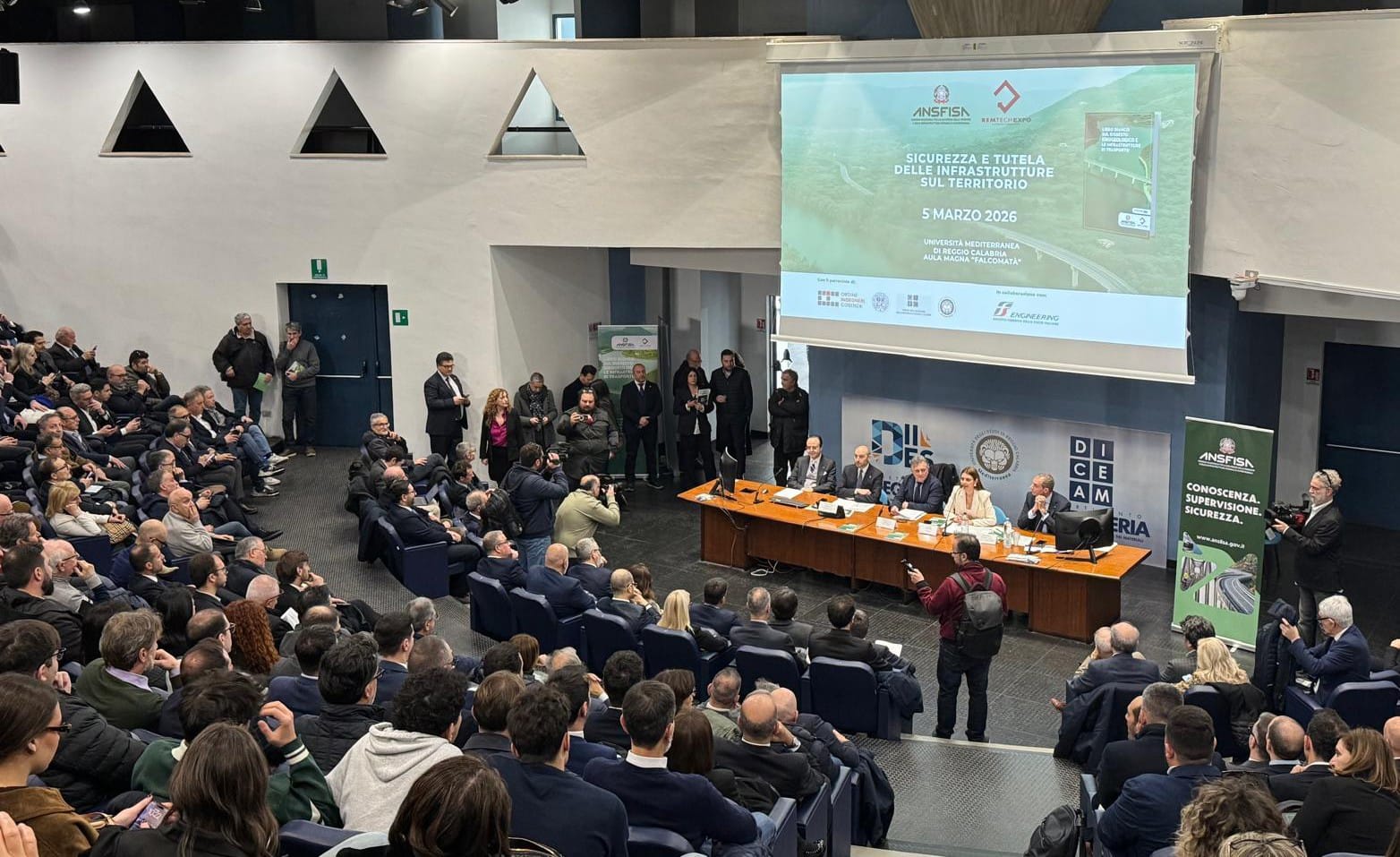
The White Paper on Hydro-geological Instability and Transport Infrastructure makes it clear that prevention work along roads exposed to unstable hillsides – such as those running alongside lakes – can no longer be based on specific interventions or emergency response. The study highlights four key recommendations:
- The White Paper on Hydro-geological Instability and Transport Infrastructure makes it clear that prevention work along roads exposed to unstable hillsides – such as those running alongside lakes – can no longer be based on specific interventions or emergency response. The study highlights four key recommendations:
- Integrating geological, engineering and safety skills into a multidisciplinary assessment, given that linear infrastructure crosses highly varied terrain and requires quantitative risk classification methods.
- Ensuring service continuity by means of work to reduce infrastructural vulnerability, not simply slope danger: high-impact structural interventions such as drainage systems, rockfall nets, slope stabilisation and monitoring
- Using common know-how, monitoring and planning platforms to create a co-ordinated system of data, inspections and action priorities.
Collaboration with Local Authorities: Hydro-geological instability does not follow property boundaries. How is co-ordination managed between ANSFISA, road managers (such as ANAS or Provincial authorities) and the River Basin Authorities when dealing with risk originating from the mountain slopes above roads?
The study highlights what has long been a critical issue: fragmented jurisdiction. The White Paper identifies institutional co-operation as one of the cornerstones of risk reduction. Information integration, joint working in both the planning-information-sharing and implementation-monitoring phases – in a nutshell, co-ordinated data collection and management – is the foundation stone of effective management in hydro-geological instability contexts.
A shared data-driven approach transforms local information into prompt decision-making. Co-ordination of this type is essential in lake regions, where gravitational phenomena often originate outside the jurisdiction of road managers and require governance at basin scale.
Predictive Maintenance: Beyond visual inspections, you are moving towards data-driven monitoring. Can this approach help classify the highest-risk stretches of lakeside roads, enabling safety interventions before a catastrophic event occurs?
Prevention is built on the ability to anticipate phenomena rather than simply react to events. ” Making things safe” means reducing the probability of certain events occurring and limiting the extent of their consequences should they occur nonetheless, in the knowledge that zero risk does not exist.
The data-driven model makes it possible to turn surveys, monitoring data and inspections into an objective classification of the most exposed stretches of road, enabling interventions to be planned before a catastrophic event takes place.
The White Paper underlines the need to move from qualitative assessments to quantitative models capable of expressing the probability, intensity and frequency of phenomena, differentiating risk in a discrete manner – which in turn allows objective priorities to be assigned to interventions on bridges, tunnels and vulnerable road sections.
This approach is particularly valuable on lakeside roads, where minor hillside movements can rapidly escalate, jeopardising the continuity of infrastructure networks that, in the vicinity of the major lakes, often offer no alternative route.
A message for the area: Given the geomorphological complexity of our lake basins, what message would you like to give to residents and tourists travelling on lakeside roads regarding the monitoring work carried out by the Agency on the “engineered structures” (bridges, viaducts and tunnels) in these areas?
Infrastructure safety is not an isolated act but an ongoing process. The key messages for the local communities are as follows:
- The Agency has structured its monitoring activity around top-down controls, which we call audits, running in parallel with sample-based inspections. The combination of the two gives us a reliable picture of the maintenance status of infrastructure and of how managers operate to ensure it remains safe.
- Bridges, viaducts and tunnels are now part of a monitoring system aimed at preventing risk rather than chasing emergencies. All managers are required to apply the guidelines for the inspection, maintenance and monitoring of engineered structures which are a modern management tool based on thorough knowledge of the infrastructure to determine priorities for safety and modernisation works, underpinned by a preventive logic.
- Finally, I would like to stress that infrastructure safety is a system-wide outcome in which every stakeholder must play their part. Our role is to monitor, but – I would say above all – to promote safety, and we do so on multiple fronts. Our primary interlocutors are managers and companies operating in the infrastructure and transport sector, but we also engage with a wide range of bodies, central and local institutions, associations and the academic world, to raise awareness of a correct and integrated approach to risk management. The White Paper makes precisely this point: achieving an acceptable level of safety in the management of our territory – and of the infrastructure running through it – requires the contribution of all parties, through simplified governance processes and greater emphasis on routine maintenance and monitoring activities, which in the long term deliver greater effectiveness and a reduction in overall management costs.