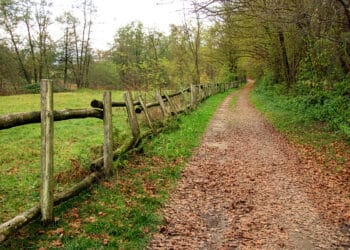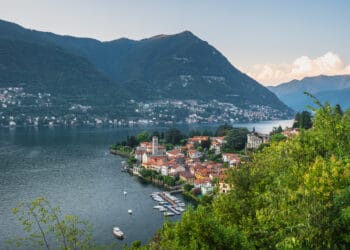

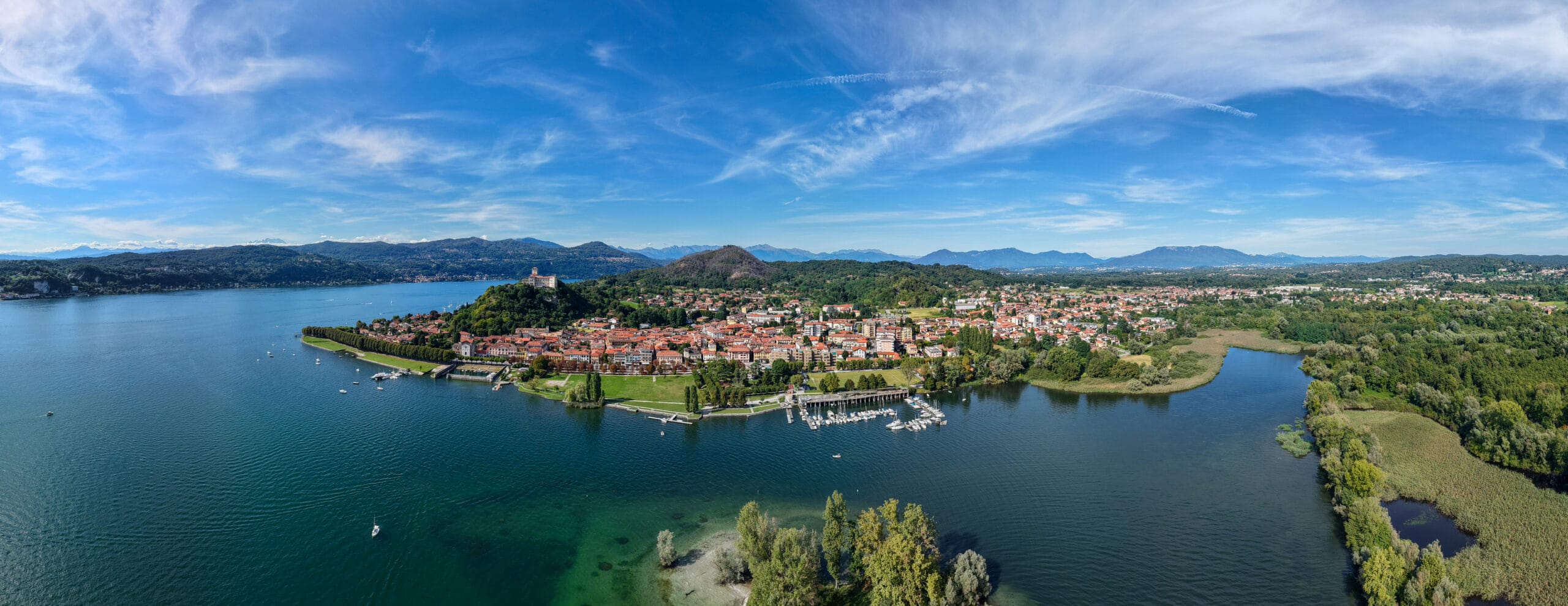
Just a few miles from the town centre is one of Varese province’s most important wetlands, with their panoramic hill footpaths
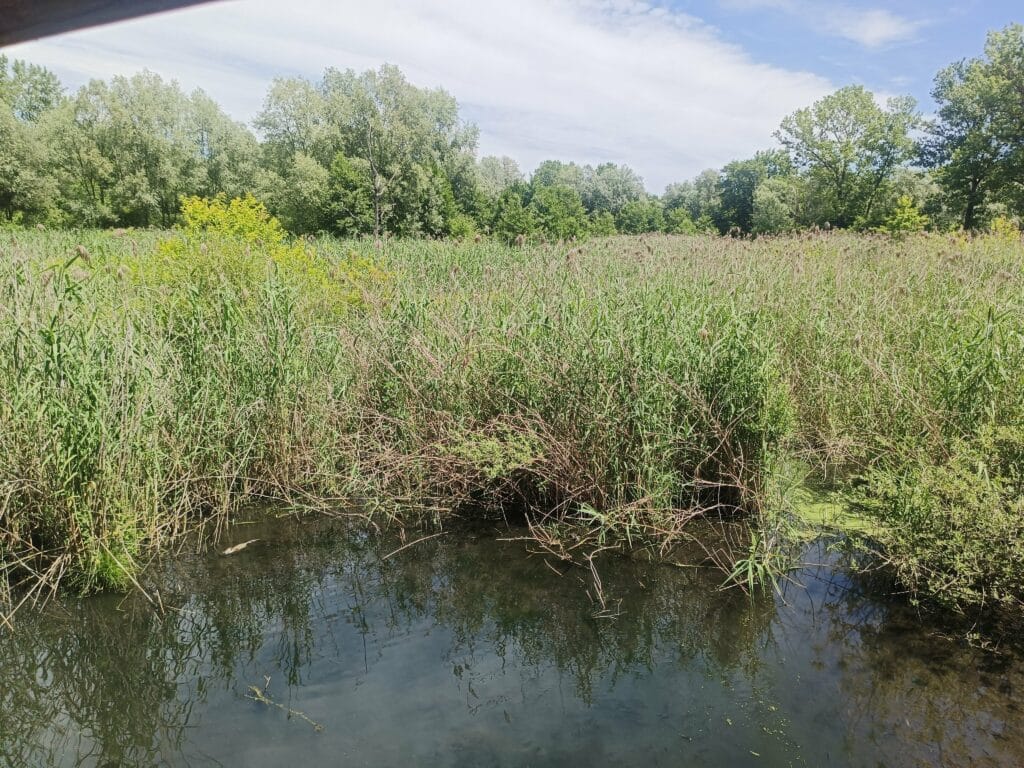
Angera’s most popular attraction is its strategically located castle, Rocca Borromea, with its Museo della Bambola e del Giocattolo toy and doll museum, on a splendid rocky spur affording wonderful views over the lake and the towns around it. The best views, though, are actually to be had by those who venture into the natural world. One of Varese province’s, and the western bank of Lake Maggiore’s, most important and large wetland areas is just a few miles from the town centre – Palude della Bruschera. It is an underwater forest which is of great landscape and environmental interest and has been included in the special protection zone Canneti del Lago Maggiore, whose access points are footpath 613 from Via Arena and Via Bruschera.
tep after step – or by bike – visitors are surrounded by a range of different ecosystems: damp black alder woods or broad leaved forests, especially oaks, springs, ponds and reedbeds with their large numbers of plants, including yellow iris, bulrushes and water lilies. A great variety of fauna species live in such a variegated ecosystem: small mammals, amphibians, water fauna and, especially, many different birds. Coots, great crested grebes and moorhens chose Bruschera as their permanent base but the more attentive will also spot herons and other migratory birds, Western marsh harriers, hobbies, black kites and black crowned night herons. The reserve also has a birdwatching hut, a refuge for those looking to explore without getting too far away from the town. And footpath 163 has a secret in store for walkers: one section of it is close by Isolino Partegora and overlooks a little gulf in which various water birds take shelter, especially cormorants, coots and swans, and there are also wonderful views over the large meadow alongside the Angera lake banks and the town’s Borromean castle.
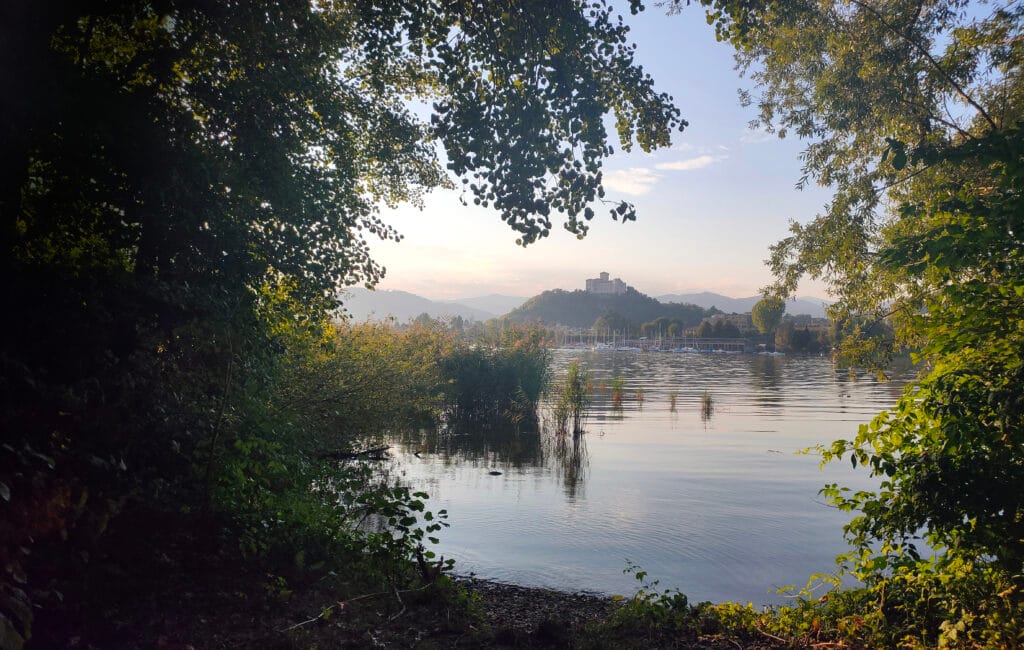
The Palude Bruschera loop is suitable for everyone, including families. It is only 12 km long and virtually flat (around 50m), straightforward but attractive.
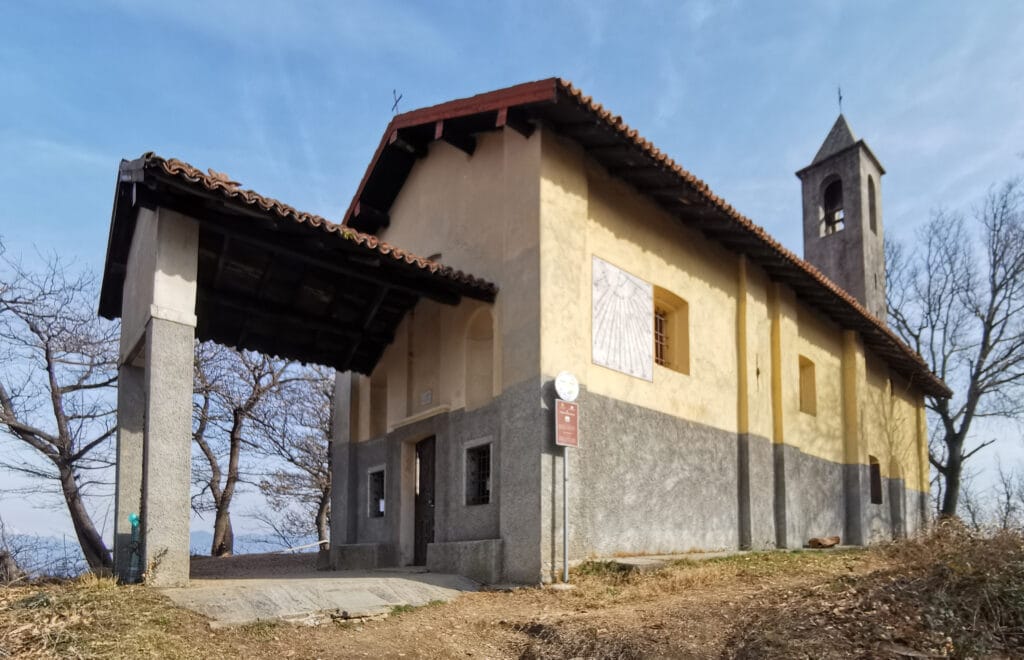
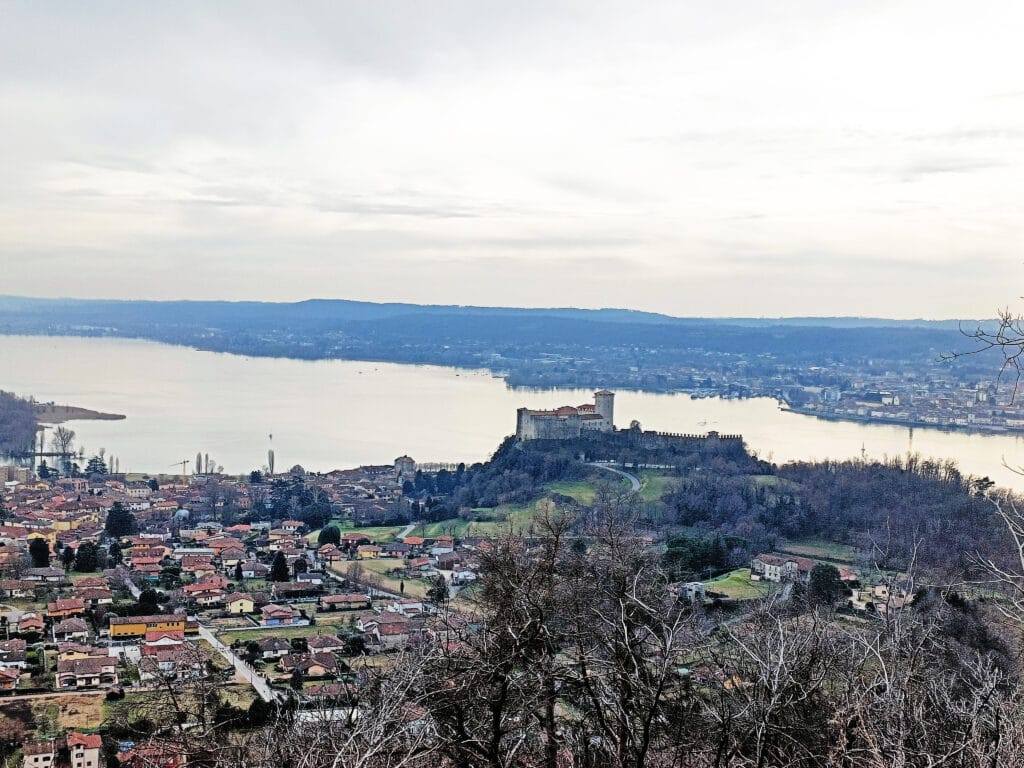
And that’s not all Angera has to offer: there is an even better viewpoint than the Rocca, Monte San Quirico. The hill is just over 400 metres in altitude but the views you get along the walk there are breathtaking. It is on a promontory shared with nearby Ranco which is equipped with a dense network of gravel roads which lead through vineyarded terraces along the Angera ridge – this is the Ronchi Varesini IGT production zone – and other points of interest such as the Chiesetta della Beata Vergine del Rosario di Uponne church (Ranco hamlet). But the classic loop begins in Angera town centre along a forest path sections of which have highly panoramic views – over the Borromean castle and the lower lake plains – and takes walkers to the summit of San Quirico with its 13th-century church of the same name. There’s a clearing alongside the building from which the views range over the upper part of Lake Maggiore and even the Alps. Maggiore per arrivare fino alle Alpi.
When Volta discovered inflammable air
It was in the Bruschera marshes that Alessandro Volta discovered methane. In 1776 he was staying at the home of Teresa Castiglioni in Angera and it was precisely in the town marshes that he discovered ‘inflammable air’ by disturbing the depths of the marshes with a stick and capturing the resulting bubbles in bottles. When he studied these gases – the result of the decomposition of plants and animals – he realised that it could be set alight.