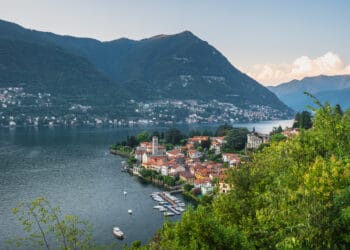

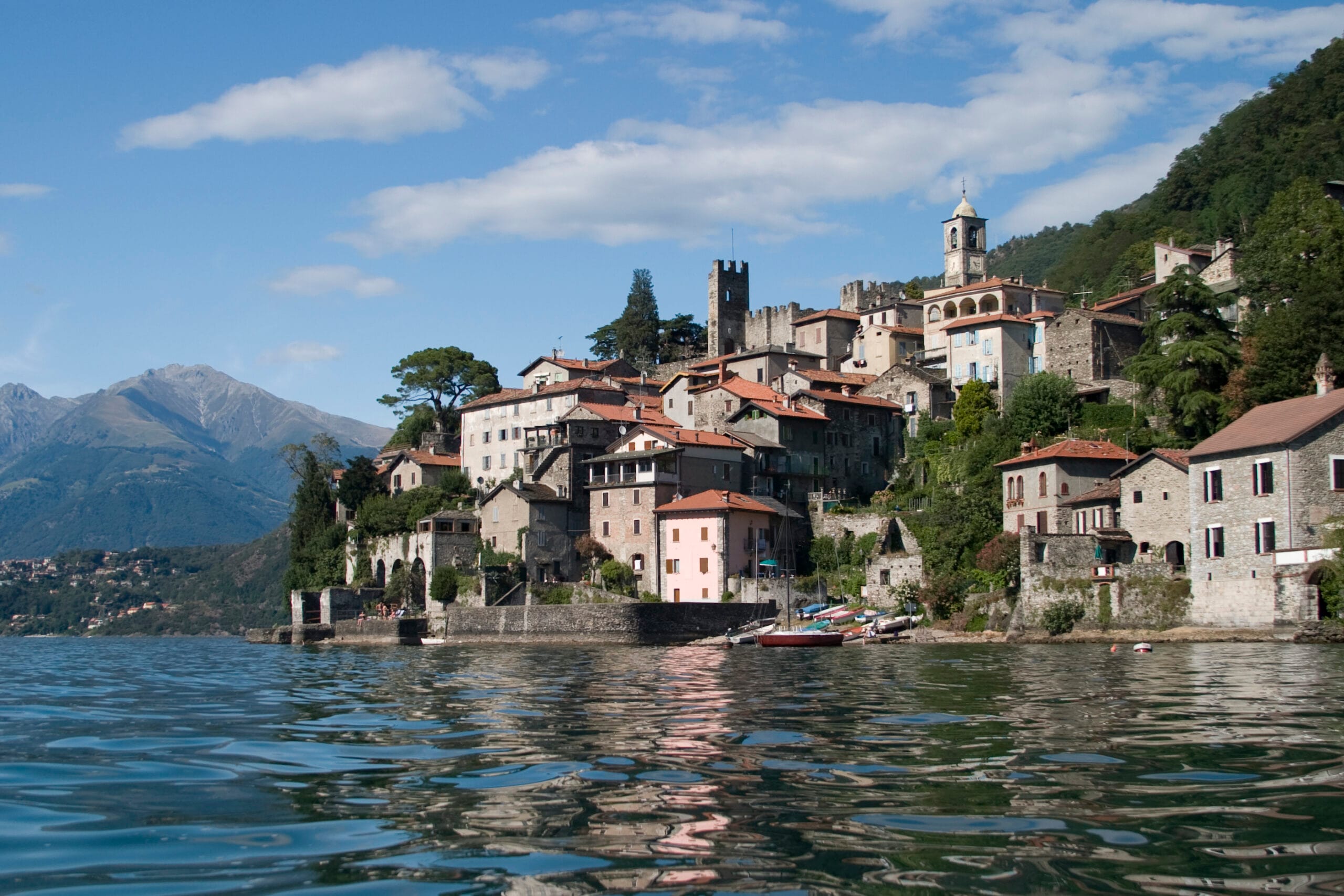
Set into the east bank of Lake Como, the village is towered over by a fourteenth-century fort. The path down from the main square to the historic quay offers unrivalled views
Set into the east bank of Lake Como, Corenno Plinio has long been one of the borghi più belli d’Italia – Italy’s prettiest towns. In fact it is said that this attractive Dervio village was chosen by famous ancient Roman judge and man of letters Pliny the Younger as his summer residence, an aristocratic past which has been commemorated in the village’s name since 1863.
Up and Down the Calogge
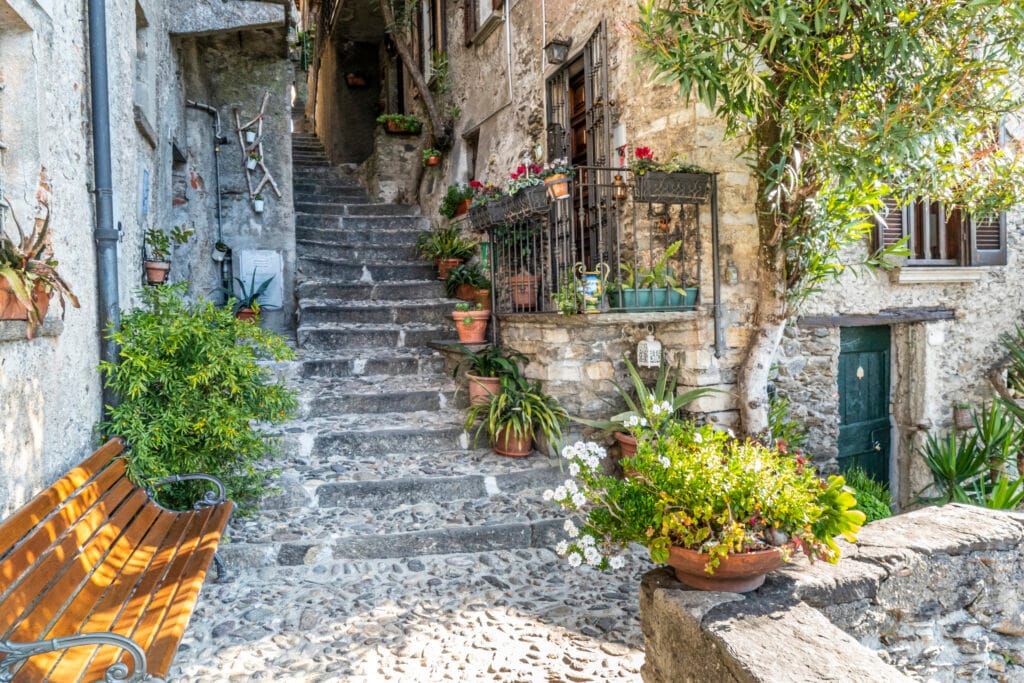
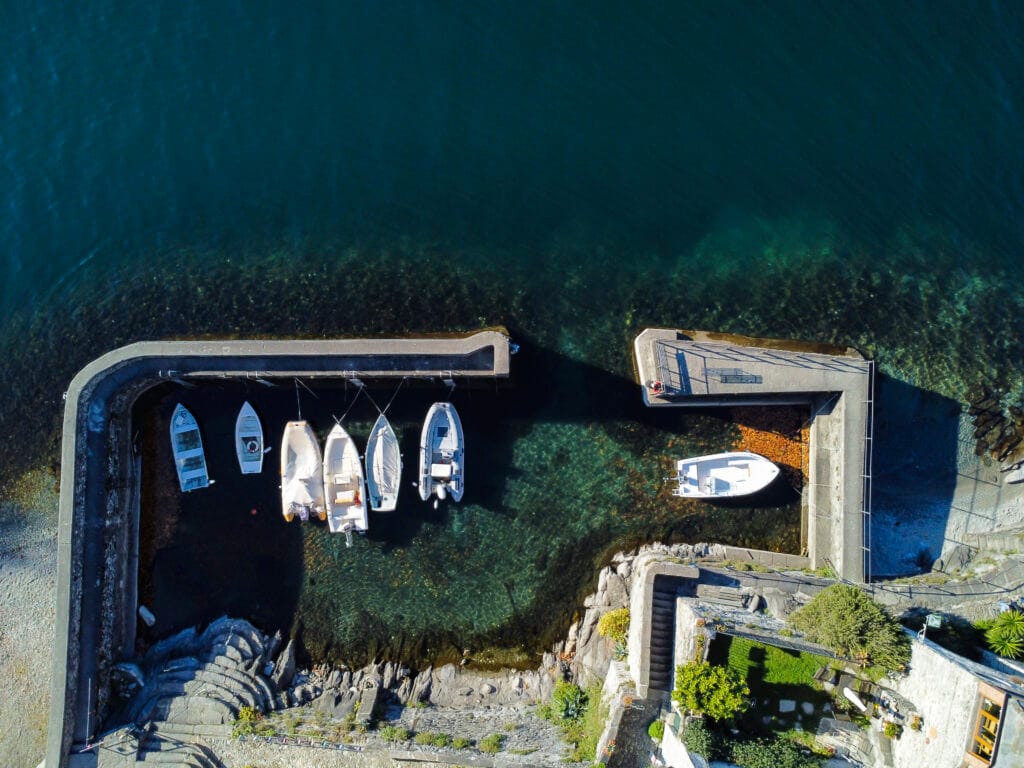
Situated at the foot of Mount Legnoncino, Corenno Plinio is also known as the ‘village of the thousand steps’. In fact the village is full of picturesque up and down alleyways known as calogge which make it immediately recognisable to visitors arriving by water as well. Luckily, there are ‘only’ 493 steps down from the village’s attractive square to the lake, a path down to the old quay which is carved out of its rocks. The path is west facing and therefore offers wonderful sunset views. And now and again the little port turns into a veritable open-air amphitheatre hosting concerts and shows against a backdrop for which the word ‘evocative’ is an understatement.
From Castles to Aristocratic Tombs
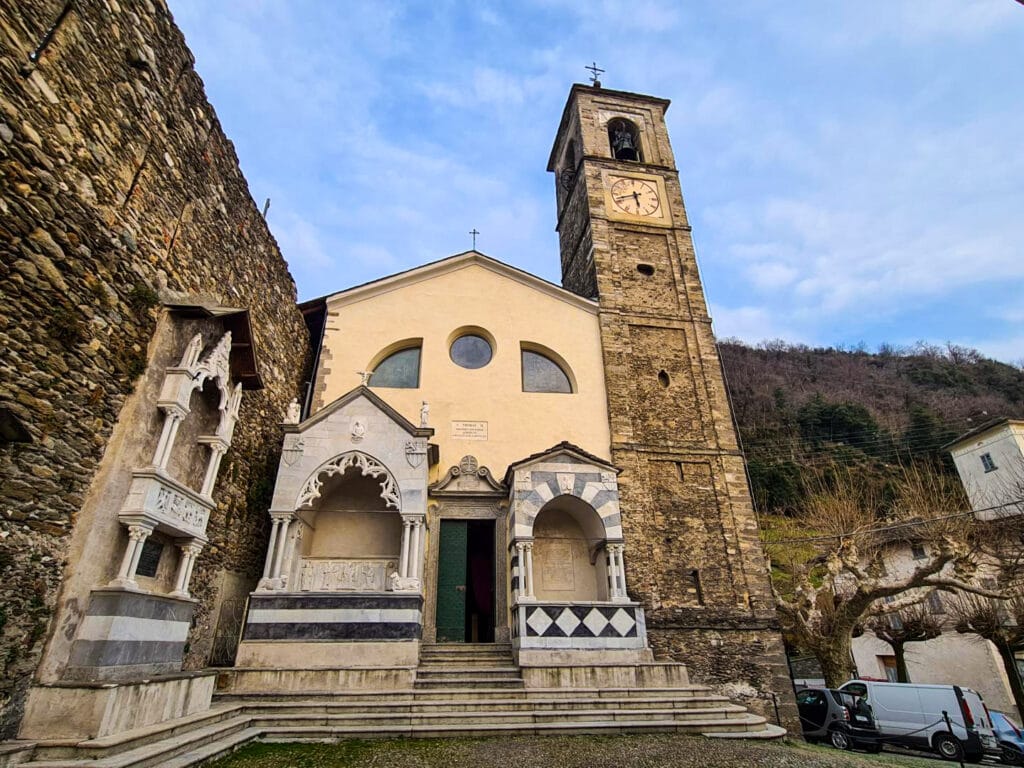
It feels like time has stood still since the Middle Ages in the village streets. This is the era in which local families led by the Andreani counts decided to build a walled castle here, a fort to use as a refuge in the event of danger or raids from the lake. Built entirely in stone and with two towers – one gabled and one square – the castle is one of Lake Como’s most impressive forts. Corenno Plinio’s medieval past also survives in its characteristic Arche Trecentesche. These are fourteenth century funerary monuments built for the Andreani counts in a range of architectural styles, spanning Romanesque, Gothic and what is known as International Gothic. It’s a variety which speaks volumes of the importance accorded Corenno Plinio both by its aristocratic art patrons and the artists who built these tombs over the years.
The Church of San Tommaso
And if we raise our eyes from the Arche Trecentesche we see a further building erected at the behest of the Andreani family, Chiesa di San Tommaso di Canterbury. The church’s gabled façade features a bevelled portal decorated with a wealth of geometric motifs and sophisticated details. Inside, the church is divided up into a series of bays with ribbed vaults followed by an apse which was later enlarged. The high altar is made of polychrome marble topped by a black marble temple. It is a haven of peace, quiet and cool for visitors of this Lake Como gem.