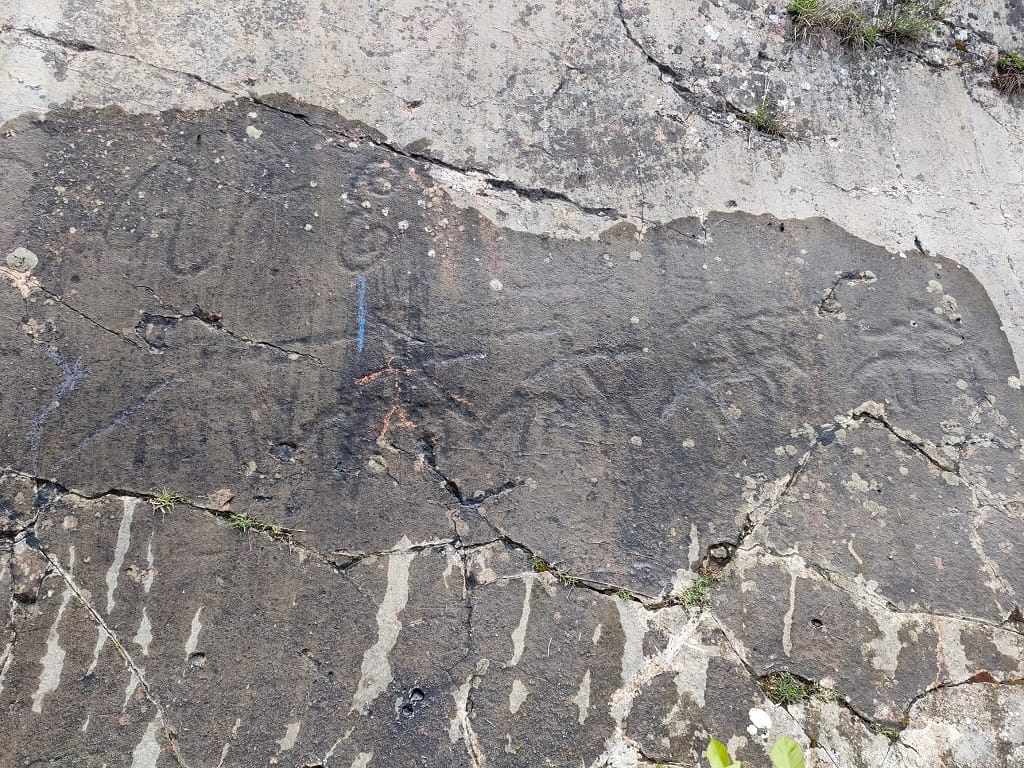

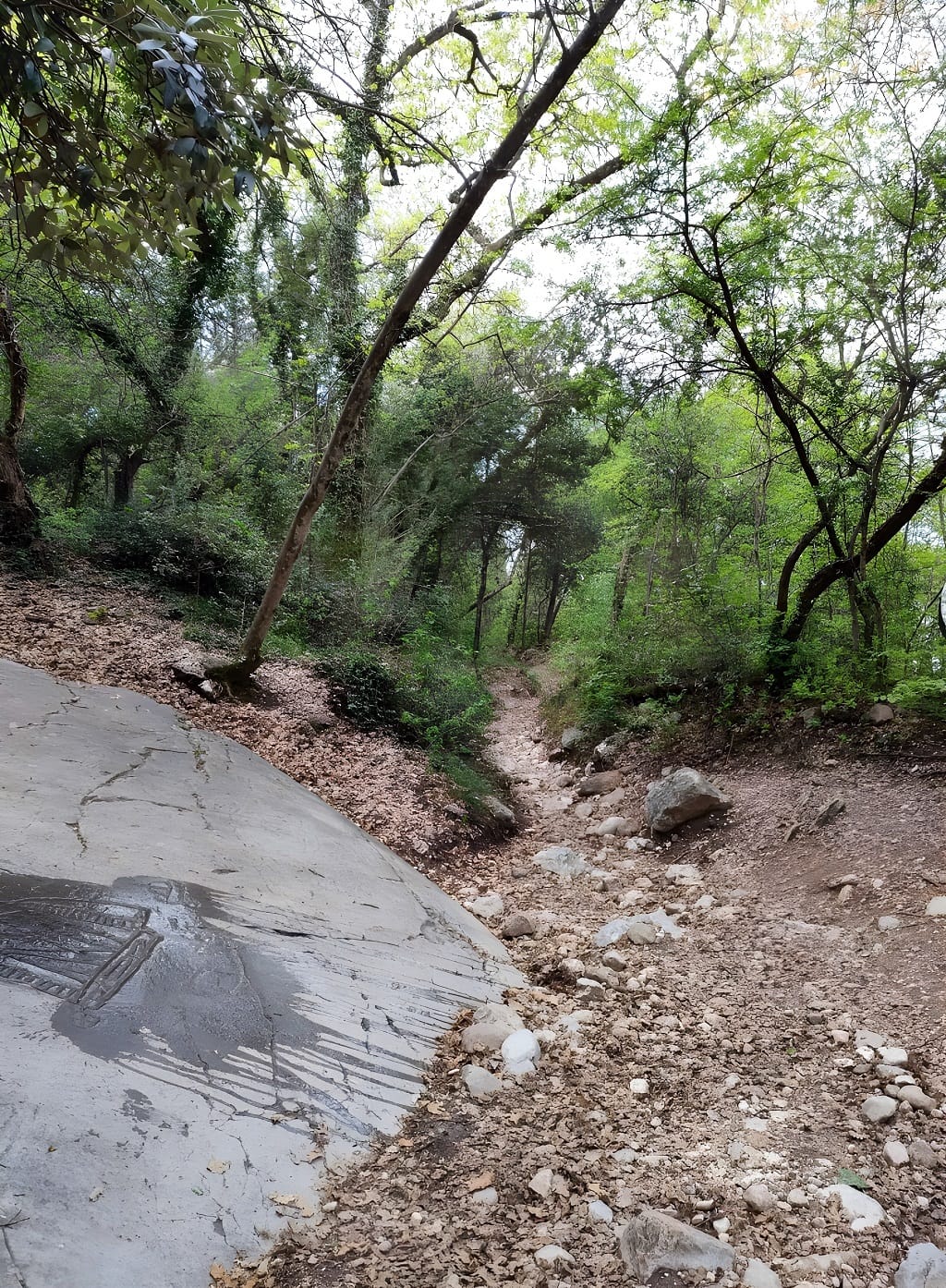
On the Veronese shore of Benaco, these symbols carved into the rock tell ancient stories. Depicting rituals, warriors, and weapons, they were left by the people who inhabited this land thousands of years ago
With its breathtaking views and mild climate, Lake Garda attracts millions of tourists every year. In prehistoric times, these favourable conditions already made the area an important crossroads. Nomadic hunters regularly frequented the region, and the traces of their presence are still visible as we walk along the Veronese shore of Benaco, particularly between Torri del Benaco and Garda. These take the form of rock carvings which date back to the Bronze Age (and beyond), smoothed using a hammering technique. They were first discovered in the 1960s by Professor Mario Pasotti.
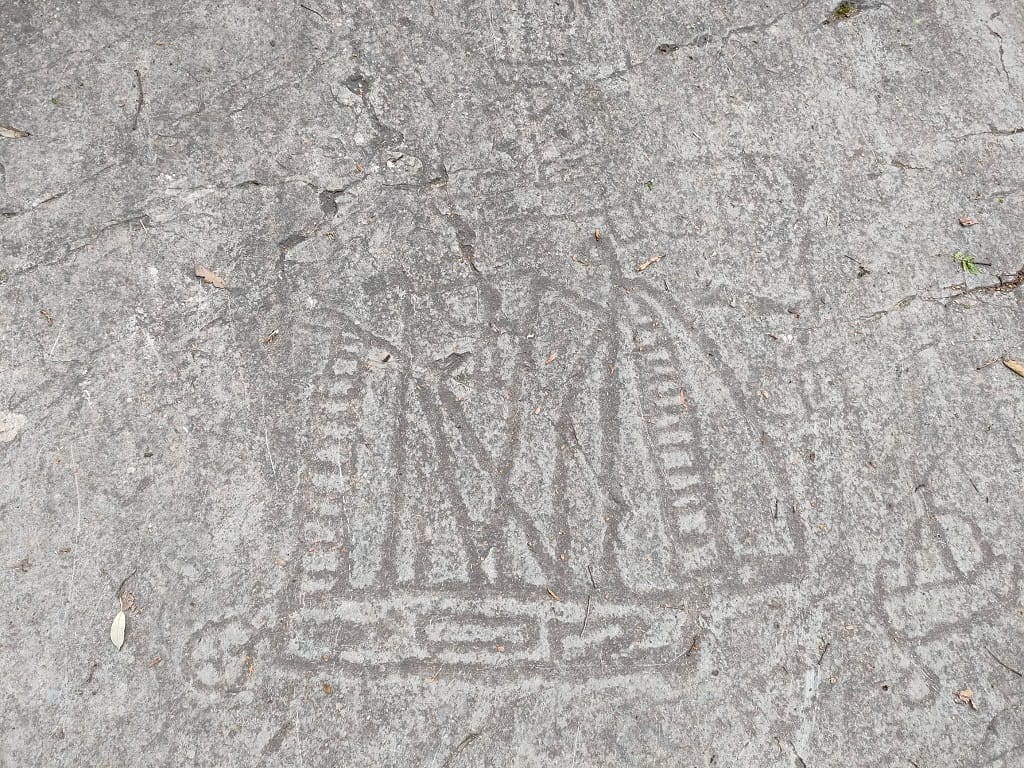
THE TWO STONES OF BRANCOLINO
Our journey to explore the carvings can ideally begin just before Punta San Vigilio, in Garda, ascending from Via Castei toward the Brancolino area. Here, the first site is the Pietra delle Griselle, which depicts men with raised arms, likely in prayer, alongside some prehistoric weapons. A large boat, probably carved more recently, in the 19th century, is also represented. Not far away we come across the Pietra dei Cavalieri, which depicts twelve armed men on horseback facing south — the direction from which the greatest threats to the local people came. The presence of what appear to be helmets with plumes and lances makes it difficult to date this stone. Initially, it was attributed to the Iron Age, but later hypotheses suggested medieval origins linked to the Arthurian cycle, and even the late 18th century, when Napoleon’s army passed through the area.
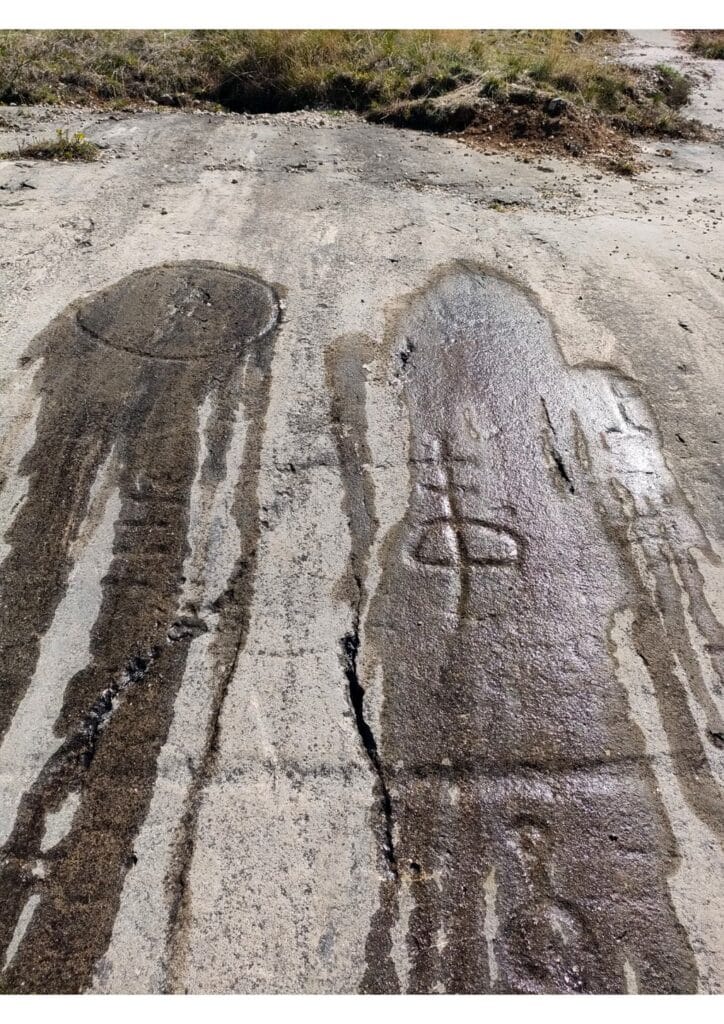
THE GREAT ROCK OF CRERO
After admiring the Brancolino carvings, we can head north to the Crero area, where the Great Rock is located. It is the largest stone among those found on the Veronese shore of Lake Garda. It depicts a variety of subjects, likely from different historical periods. These include human and animal figures, as well as letters from pre-Latin alphabets, solar symbols, and boundary crosses. Given the diversity of the contents and the difficulty in dating them, whether these carvings are connected remains a mystery. The rock carvings do not end here. Over the past 60 years, experts have discovered additional carvings, which are often smaller and isolated. Notable examples include the stone of the Senge di Marciaga (on the border of Costermano, Torri del Benaco, and Garda), the Bocca del Trimelô stone (on Mount Luppia), and the Pietra della Luna (between Torri and Crero). With over 3,000 depictions on 250 carved rocks found across the municipalities of Garda, Torri, Costermano, Brenzone, and Malcesine, one thing is certain: there are many more artefacts awaiting discovery and study — just like the ancient peoples who once lived in these lands.